

Picking the right keywords is one of the most important decisions when growing your website.
Should you target short-tail keywords with massive search volumes, or long-tail keywords that attract highly specific, ready-to-convert traffic?
Both have a role to play, and knowing how to incorporate them into your blog and website content will determine how much organic traffic your site pulls in.
In this guide, we break down the differences, weigh up the pros and cons of each, and show you how to use both together to drive more traffic and increase conversions.
Image Source: Magnific
Long-Tail vs Short-Tail Keywords: Quick Overview
| Long-Tail Keywords | Short-tail Keywords |
| Specific, multi-word phrases | General, single or two-word phrases |
| Targets niche audiences | Targets broad audiences |
| Drives highly targeted traffic | Drives less targeted traffic |
| Low search volume | High search volume |
| Low competition | High competition |
| Low CPC (Cost per Click) | High CPC (Cost per Click) |
| Hard to incorporate naturally into text | Easy to incorporate naturally into text |
What Are Long-Tail Keywords?
Long-tail keywords are longer, more specific phrases used to target niche audiences. These keywords focus on more detailed queries and are typically three or more words long.
Here are some examples of long-tail keywords:
- Vegan gluten-free dessert recipes
- Best phones for taking photos
- Affordable watches for small wrists
- High-protein breakfast ideas for weight loss
- Beginner yoga classes near me
Benefits of Long-Tail Keywords
Long-tail keywords are valuable because they accurately reflect a user’s intent. Users searching for long-tail keywords are often further along in the buying process, making them more likely to convert once they land on your website.
For example, someone searching for “affordable watches for small wrists” is typically closer to making a purchase than someone simply typing “watches.”
Other benefits of targeting long-tail keywords for SEO include:
- Less competition: Long-tail keywords are easier to rank for than high-volume terms. Since fewer businesses target these specific phrases, your chances of ranking higher in search results increase.
- High visibility: Although long-tail keywords may have lower search volumes, they can drive highly targeted traffic, improving your overall visibility to relevant audiences.
- Lower bidding costs: When you bid on long-tail keywords to rank on paid results, the cost per click is typically lower due to less competition.
Limitations of Long-Tail Keywords
Long-tail keywords are tricky to incorporate naturally into text, and forcing them can make your writing seem unnatural.
You can work around this by finding more creative ways to weave them in, or simply accepting a lower keyword density. Either way, focus on building keyword presence thoughtfully across the page rather than cramming them in at the expense of readability.
Here are a few other things to keep in mind with long-tail keywords:
- Low volume: Since these keywords are so specific, they often have a lower search volume, making it harder to drive traffic.
- Specific context: The effectiveness of these keywords relies heavily on matching user intent. If you misinterpret what people are searching for, you won’t get the results you’re hoping for.
- Time-consuming: Long-tail keyword research demands more time and thought. Because these keywords target such precise queries, you need to dig into the different ways people phrase their searches and map each one back to a clear search intent before you can use them effectively.
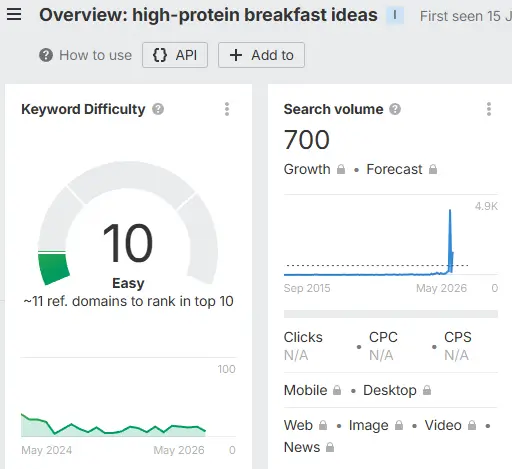
Image Source: Ahrefs
What Are Short-Tail Keywords?
Short-tail keywords are broad, popular one or two-word phrases that target a wider audience. These keywords focus on general topics or services and are typically less specific.
Here are some examples of short-tail keywords:
- Dessert recipes
- Top phones
- Laptops
- Breakfast ideas
- Yoga classes
- Benefits of Short-Tail Keywords
- Short-tail keywords have extremely high search volumes, so if you manage to rank for one, you can draw in a lot of traffic.
For example, the keyword “recipes” has a monthly global search volume of 933,000 (according to Ahrefs data). In contrast, the long-tail keyword “low calorie dessert recipes” only has a search volume of 3400.
Other benefits of targeting short-tail keywords for SEO include:
- Wide-reaching search terms: Short-tail keywords can rank for different user intents, giving you more opportunities to reach audiences. For instance, “Sports shoes” can rank as commercial, informational, and navigational search intent.
- Expansive reach: You can attract a wide variety of audiences across demographics with short-tail keywords. Most people are interested in “fitness,” but fewer will be specifically looking for niche terms like “sportswear for older women” or “fitness for beginners.”
- Multiple use cases: Short-tail keywords work well across different page types. Their high search volumes make them a strong fit for homepages, category pages, product pages, and anywhere throughout your site where you want maximum visibility for a core topic or offering.

Image Source: Ahrefs
Limitations of Short-Tail Keywords
Although short-tail keywords offer the chance to reach a wide audience, achieving this is tricky.
Because these keywords are so general, they come with extremely high competition. You’ll often find your direct and indirect competitors already targeting these keywords.
As a result, ranking highly on search engine results pages (SERPs) for short-tail keywords can be a tough feat.
Some other limitations of short-tail keywords are:
- Generic traffic: Although these keywords attract a lot of users, many may not be specifically interested in your offerings, potentially leading to higher bounce rates and lower engagement.
- Low conversion rates: Because these keywords don’t address specific needs or queries, they often attract users in the early stages of their search journey. This means they’re less likely to convert into customers.
- High bidding costs: If you’re using paid advertising, short-tail keywords can be expensive to target due to the fierce competition. This means higher costs per click (CPC) without guaranteed returns.

Image Source: Magnific
How to Research Long-Tail and Short-Tail Keywords
With the pros and cons of each, long-tail and short-tail keywords can be used together to cover all the bases for your website.
Start by identifying your primary short-tail keywords that define your website and business.
List the main topics related to your website or the services you offer. Then, brainstorm short phrases that represent these topics.
Use SEO tools such as Ahrefs and Semrush to see the volume and competition of these keywords.
DEMA Tip: Most of these tools have free versions, letting you find a few keyword ideas each day.
Once you’ve found relevant short-tail keywords, expand them into more specific long-tail keywords that address detailed user queries.
Here are some examples:
- Sportswear – Sportswear for older women
- Doctors – Best pediatricians near me
- Kitchens – Modern kitchen remodeling ideas
- Plants – Pet-safe indoor plants
- Travel – Budget travel destinations in Europe
- Photography – Easy photography tips for beginners
You can also find ideas through Google’s autocomplete search feature by typing in short-tail keywords and seeing long-tail suggestions.

Image Source: Google
From there, you can form relevant and specific content ideas without needing to use a dedicated SEO tool.
A Balanced Keyword Strategy For Greater Reach
Long-tail and short-tail keywords are not competing strategies, but rather complementary ones.
Short-tail keywords, often broader and more competitive, are excellent for attracting high search volumes and building brand visibility.
Long-tail keywords, which are more specific and lower in search volume, are more suited to capturing intent-driven traffic that’s more likely to convert.
Your best strategy is to target both types of keywords to create a balanced and effective SEO approach.
Not sure how to strike the right balance? At DEMA Marketing, we can save you time and guesswork.
Our SEO services cover keyword research, competitor analysis, search trend monitoring and more, giving your brand the edge it needs to dominate both long-tail and short-tail search results.
Contact us for a free SEO quote today.