
The Email Marketing Tips Small Businesses Use to Turn Subscribers Into Customers
Growing your audience as a small business isn’t easy when time and resources are already stretched thin.
But, thanks to email marketing, businesses of any size have the power to reach and communicate with potential customers around the world, again and again, without a massive budget behind it.
So whether you’re just getting started with email campaigns or you want to steal the tactics professionals actually use, you’re in the right place. Let’s dive into the top ten email marketing tips small businesses are using to turn subscribers into loyal, paying customers.
Image Source: Magnific
What Is Email Marketing?
Email marketing involves sending targeted messages to a list of subscribers to build client-business bonds and promote products or services, all while driving engagement along the way.
There are several different types of marketing emails, including:
- Welcome emails: Sent to new subscribers to introduce them to your business and set expectations for future communications.
- Newsletter emails: Regular updates containing valuable content such as business news and industry insights to keep your audience engaged.
- Promotional emails: Targeted messages that highlight special offers, discounts, or seasonal-based promotions.
- Invite emails: Announcements of events or product launches with invites for recipients to attend or participate in.
- Survey emails: Used to gather feedback from your subscribers about their experiences or opinions.
The Benefits of Email Marketing
Is email marketing really worth the time, effort, resources, and learning curve for small businesses? Absolutely.
Focusing on email campaigns is a fantastic way to support your business’s growth. Here’s how:
- Advertising services: Email marketing puts your products and services directly in front of the people most likely to buy them, without you needing to battle SERP algorithms or invest in ad spend.
- Connecting with audiences: Email marketing builds and maintains a direct connection with your audience. You can encourage loyalty through regular newsletters, updates, and personalized messages.
- Gathering insights: Every email you send hands you real data to work with, such as click-through rates, open rates, conversion rates, and subscriber behavior, so you’re never guessing what’s working. You have the power to optimize, test, and improve with every campaign you launch.
- Building credibility: With high-quality, consistent emails updating your subscribers, you can position your small business as a trustworthy and professional option. As your audience sees that your business is committed to providing valuable information, their trust in your brand grows.
The Best Email Marketing Tips for Small Businesses
Want to increase leads and build a loyal audience base through emails?
Follow these top email marketing tips to see how you can transform your approach:
1. Build a Sign-up Form
One of your first steps in email marketing should be creating an easy-to-use sign-up form that will help you gain subscribers.
Sign-up forms are usually displayed on your website either embedded into the body of a webpage, as a pop-up, or on a designated landing page.
Although a sign-up form may seem simple to create, its design, copy, features, and functionality can significantly impact your subscription rate.
Follow these quick tips to learn how to create the best possible sign-up form to jumpstart your email marketing campaign:
- Minimize your number of input form fields: The more work a user has to do, the less likely they’ll do it. Stick to including only one or two form fields, such as “name” and “email address”.
- Keep copy concise: Sign-up forms are self-explanatory, so you don’t need to include much text. All the information your form needs is to briefly let users know what to expect from your emails.
- Provide incentives: To encourage more people to sign up, offer an incentive that provides immediate value, such as a discount on their first purchase, access to exclusive content, or an entry into a giveaway.
- Use a double opt-in method: By making users confirm their sign-up to your email list through a double opt-in process, you will get fewer subscribers, but you’ll also avoid contaminating your subscriber list with fake, misspelled, spam, or inactive emails.
- Include clear CTA: Your sign-up form CTA (Call to Action) should be bold, compelling, and easily noticeable to convince website visitors to click on it and add to your subscriber list.

3. Clean up Your Email List
Rather than sending emails to as many individuals as possible, it’s far more worthwhile to clean up your recipients list and focus on quality over quantity. With a well-segmented and up-to-date email list, you can limit unsubscribers, improve open rates, and lower overall email marketing costs.
Start by pinpointing which existing subscribers are inactive or disengaged with your emails. It’s up to you to define what “disengaged” means in the context of your audience.
For example, you might decide that a disengaged recipient is someone who hasn’t interacted with your emails for over six months, a year, or another time frame that makes sense for your business. Once identified, you can remove these subscribers, attempt to re-engage them with targeted campaigns, or move them to a separate list.
You’ll also want to clean up your email list by getting rid of disposable, duplicated, or unverified email addresses. These types of emails will skew your metrics and result in unnecessary costs for your email campaigns, so remove them and focus on building a healthy and engaged email list.
3. Consider Your Subject Line
Your subject line can make or break your email marketing efforts. With a well-thought-out subject line, you can set expectations for subscribers, increase your open rates, and encourage engagement with the content of your email.
Here are some of our favorite subject line examples:
- “You’re missing out” plays on FOMO (fear of missing out), a powerful psychological trigger. It creates a sense of urgency among recipients who don’t want to miss a valuable opportunity.
- “Happy birthday [recipient]” is personalized to subscribers, who may have included their birthday when signing up to your emails. Using the subscriber’s name and acknowledging their birthday shows your business appreciates them and helps build a personal connection.
- “[Business name] newsletter” is straightforward and informative, providing clear information about what the email contains. Including your business’s name also helps reinforce brand recognition.
- “Friendly reminder: [action]” combines a polite tone with a clear CTA by gently nudging subscribers to complete a specific task, such as completing a sale or updating their information. You’ll encourage recipients to act without feeling pressured while demonstrating that your brand values their time.
These are just a few subject lines that inspire, persuade, or inform your subscribers. When creating your own or altering these examples, remember:
- Be specific
- Don’t make false promises
- Refrain from using excessive punctuation or capitalization
4. Optimize Content for Mobile
If you want to improve your engagement rates and other metrics through your email campaigns, make sure every email is optimized for mobile content.
Emails that aren’t responsive or mobile-optimized will result in a poor user experience for many of your subscribers, drastically increasing the likelihood of them being ignored or deleted. Plus, with so many other businesses catering to mobile users through their websites and emails, your unoptimized email will stand out like a sore thumb.
If you want your emails to perform well on mobile devices, follow these best practices for creating mobile-friendly emails:
- Short subject line: Limit the subject line to around 35 characters to ensure it displays fully on mobile screens.
- Use large fonts: Choose between 17-22px for your email copy.
- Simplified layout: Avoid clutter by using a single-column design.
- Compress images: Use tools to reduce the file size of images without losing quality to improve load times.
- Include alt text: Ensure all images have descriptive alt text for better accessibility.
- Concise paragraphs: Restrict paragraphs to a maximum of three sentences, with ample white space between them for easier readability.
- Test on mobile devices: Preview the email on various mobile devices to ensure it displays correctly.
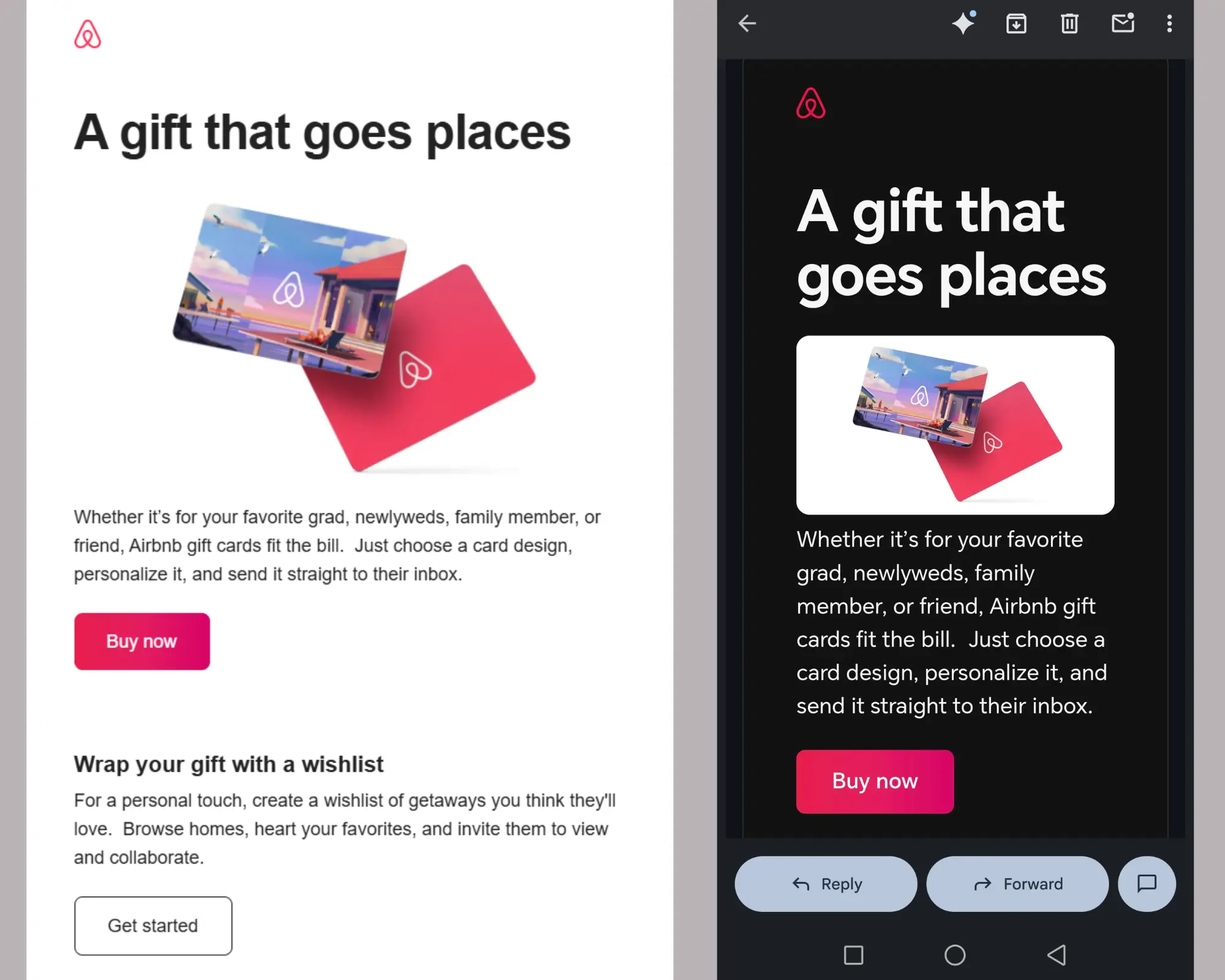
Image Source: Airbnb
Desktop and mobile version of a promotional email by Airbnb
5. Include a CTA Button
The main purpose of your emails is to drive action. Whether you want recipients to make a purchase, sign up for an event, or simply visit your website, you must include a clear and compelling call to action button.
Your CTA should stand out and be easy to find within your email. Often, businesses will place it near the top to prevent subscribers from needing to scroll down to find it. Repeating the CTA at the end of the email can reinforce the message and provide another opportunity for engagement.
Take a look at some interesting CTA that can drive clicks in your emails:
- Learn more
- Read more
- Discover how
- Download now
- Register now
- Sign me up
- Start today
- Add to cart
- Finish checkout
- Leave a review
- Take a survey
- Follow us
- Stay connected
6. Avoid Spam Tactics
A top risk when sending out emails is having each one flagged as spam or junk by filters. These filters assess the content and size of the email, as well as other factors, such as its included links, to decide which emails should be sorted into the spam folder.
Here are the best spam tactics to avoid to prevent your emails from being flagged by filters:
- Personal email addresses: Don’t send business emails from free addresses that end in @gmail.com, @outlook.com, or something similar. These make your brand seem less trustworthy, and recipients will be more likely to mark them as spam. Instead, use a branded email such as [email protected].
- Attachments: Avoid adding attachments to emails, such as files or images, as they can make you look suspicious and likely lead to your emails being marked as spam.
- Phishing phrases: Most spam emails use phishing phrases or spam words to try to manipulate, mislead, or deceive recipients. Phrases like “Free,” “Near You”, or “Click Here” are often associated with scams and can trigger spam filters. Avoid these and use clear, honest language that reflects the true purpose of your email.
- Images: Spam filters are more likely to block emails that contain too many images, as this is a common spam tactic. Limit the use of images and ensure your email has a good balance of text and visuals. Mailchimp suggests sticking to a text-to-image ratio of 80/20 to avoid your email being deleted or falling into a spam folder.
7. Reflect Your Brand’s Identity
Sending emails can be a fantastic way to remind subscribers of your services and keep your business in their memory. However, your efforts may be wasted if you don’t reinforce your brand identity through your emails.
Your recipients should instantly recognize your business as they open your emails, and you can achieve this by incorporating various branding elements.
The main branding elements you should be adding to your emails include your:
- Logo
- Tagline
- Color palette
- Fonts
- Tone
- Voice
8. Make Ready-Made Sharing Options
One of your goals with email marketing is to convince recipients to share your email on their social media accounts. They’ll be much more likely to want to do this if a fast and easy option is available, which is where ready-made sharing links can be useful.
With a standard sharing link, users will click on it and be redirected to their social media profiles, where they can add text and share your email with their followers. For many users, this can be too much of a hassle, so we recommend creating ready-made tweets that fill in the text on behalf of your followers.
Use a free share link generator tool and add a URL you want users to be redirected to. For example, you might include a URL to a webpage where you’re promoting an exclusive offer.
Then add the text that will be automatically included when any of your email recipients choose to share your email content. Text can be short and simple to convince others to check out whatever you’re offering, such as:
Check out this amazing deal from [Your brand]: [Link] #SpecialOffer
Take a look at this article about [Topic] from [Your brand]: [Link] #MustRead
9. Utilize Email Automation Tools
Even if you’re a small business, using automation is typically a great investment. You can save time, make your workflow more efficient, and reduce errors when sending emails.
How Email Automation Tools Help
Most automation tools send emails on your behalf based on predefined triggers or schedules. For example, you can set up an automated welcome email to send to new subscribers immediately after they sign up for your newsletter, giving them a warm, personal introduction to your brand.
Another example is automating follow-up emails. If a customer abandons their shopping cart, an automation tool can send a series of reminder emails to encourage them to complete their purchase, helping you to recover potentially lost sales with minimal intervention.
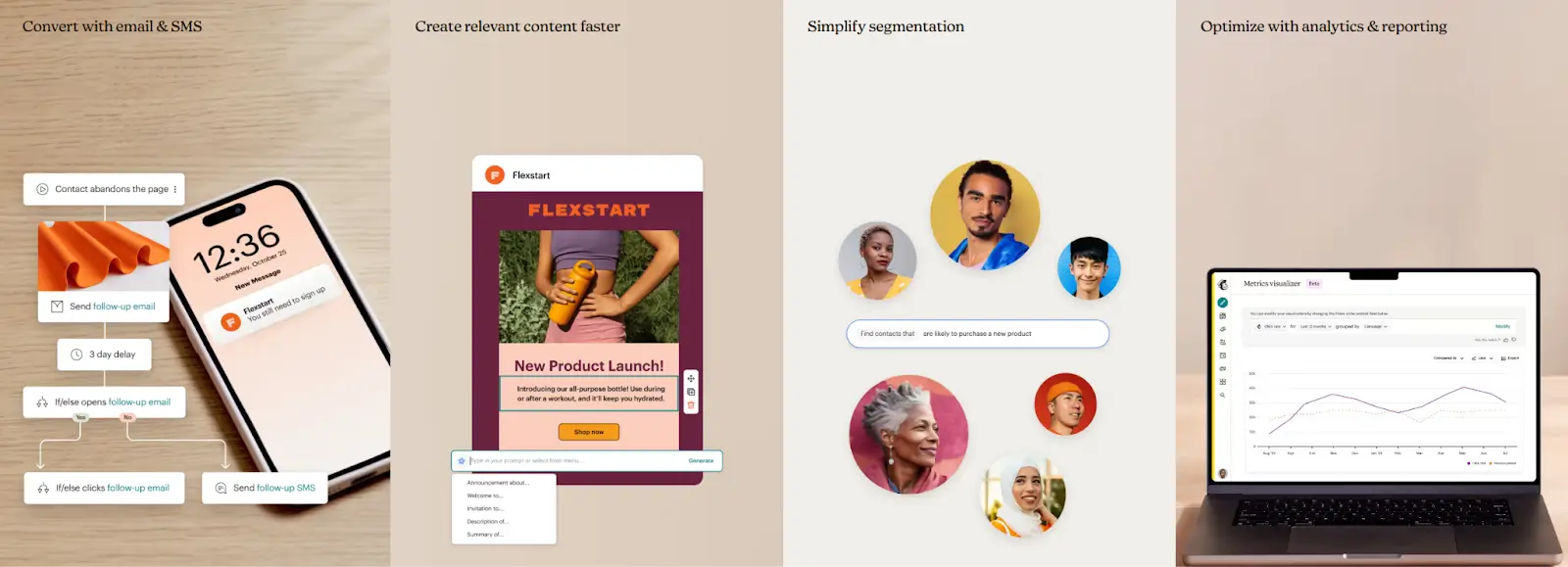
Image Source: Mailchimp
Email automation tools will also help you stay consistent, which is key when it comes to email marketing. When you stick to a schedule, your subscribers will know when to expect an email from you.
Finally, many automation tools facilitate preference centers, which you can utilize to let your subscribers choose which emails they receive from you. Some may prefer just to hear from your business when you have a promotion or special offer. Others will want to remain updated with all the latest news and trends regarding your products and services.
10. Don’t Send Emails Too Often
One of the worst things you can do during your email marketing campaign is overwhelm your recipients with too many emails.
Of course, you’ll want to stay in the minds of potential customers. But if you’re constantly distributing emails, they can get annoyed and may unsubscribe or block your account.
Generally, experts recommend limiting emails to once or twice a week, although the sweet spot can vary for any given business.
There is some element of trial and error, but we suggest starting with fewer emails and keeping an eye on metrics such as open rates, click-through rates (CTR), and unsubscribe rates.
If you’re sending several different types of emails, you can get away with a more frequent posting schedule. For instance, you may limit yourself to monthly promotional emails, but you can send informative content, such as newsletters, more regularly.
Unlock the Power of Email Marketing for Your Small Business
Email marketing offers small businesses a powerful way to reach their audience and build relationships that truly last.
By crafting engaging subject lines, optimizing for mobile, using automation tools, and maintaining a strong brand identity, you can transform your email campaigns into a true engine for growth.
Nailing email marketing can be tricky, especially for a small business. After all, you have plenty of other responsibilities and considerations, so it’s unsurprising that for most SMBs, email marketing gets left on the back burner.
But don’t let the potential of quality email campaigns go to waste! Instead, turn to our team at DEMA Marketing for tailored strategies that save you time while driving engagement and delivering optimal email marketing results.